Beginner's Guide to Making Matcha at Home
The tools you actually need, ceremonial vs culinary grade explained simply, and a step-by-step method for a smooth, frothy bowl.
Matcha has a reputation for being fussy, but a good everyday bowl only takes a few minutes once you know the basics. This guide covers what matcha actually is, the few tools that make a real difference, how to pick a grade, and a simple method you can repeat every morning.
What is matcha?
Matcha is finely stone-ground powder made from green tea leaves that are shade-grown for several weeks before harvest. Shading slows growth and boosts chlorophyll and amino acids (especially L-theanine), which is why good matcha is a vivid green and tastes smooth and savoury (umami) rather than harsh.
After harvest the leaves are steamed, dried, and the stems and veins are removed. The remaining leaf (called tencha) is ground into a very fine powder. Because you whisk the powder into water and drink the whole leaf, matcha tastes richer than steeped green tea - and it contains caffeine, so treat it like your morning coffee.
The tools you need
You can start with just a whisk and a bowl. Everything else is nice to have.
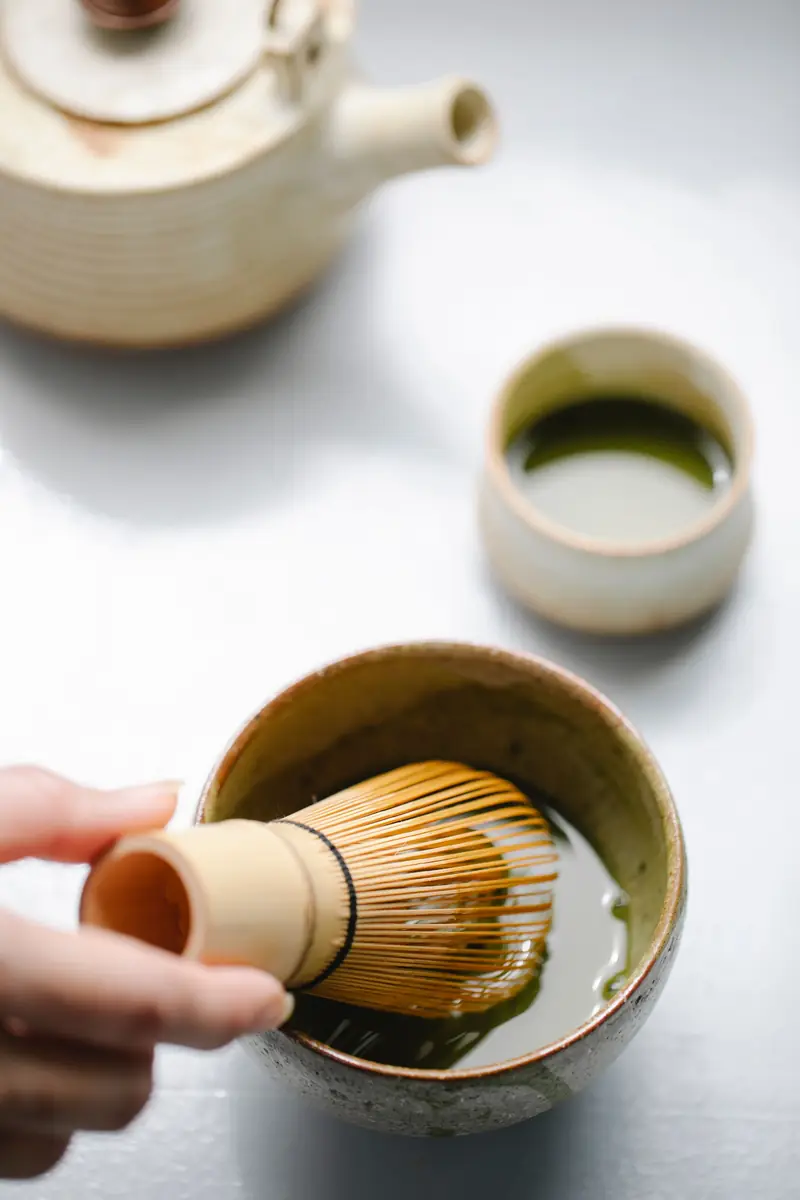
- Bamboo whisk (chasen) - the one tool that really matters. Its many fine tines create the smooth, frothy layer that a spoon can't. Look for one with plenty of tines (often around 80-120); more tines generally make a finer foam.
- A wide bowl (chawan) - you need room to whisk in a quick back-and-forth motion. Any wide, fairly flat-bottomed bowl works to begin with; a traditional chawan just makes it easier.
- A fine-mesh sifter - matcha clumps easily from static and humidity. Sifting is the easiest way to avoid lumps. A small tea strainer works fine.
- Bamboo scoop (chashaku) - optional. One heaped scoop is roughly 1 g, so two scoops is a typical single serving. A measuring spoon or small scale works too.
- Whisk holder (kusenaoshi) - optional, but it helps your chasen dry in shape and last longer.
- A kettle with temperature control - optional. You can also let boiled water cool for a few minutes.
Ceremonial vs culinary grade
You'll see matcha sold as "ceremonial" or "culinary". It's worth knowing that these aren't official, regulated standards - each brand uses them a little differently - but they point to real differences in quality and intended use.
For drinking straight
- Usually made from younger leaves, often from the first harvest of the year
- Bright, vivid green colour
- Smooth, naturally sweet and umami-rich, with low bitterness
- Best whisked with just water, so you can taste it
- Typically more expensive
For lattes & baking
- Often made from later harvests or more mature leaves
- Duller, more olive or yellow-green colour
- Stronger, more astringent and bitter flavour
- Holds up well against milk, sweeteners and baking
- More budget-friendly for everyday use
If you'll drink it with water, choose ceremonial (or a high-quality "premium" grade). If it's going into lattes, smoothies or bakes, a good culinary grade is usually the better value. Whatever the label, a fresh, vivid green colour and a smooth, grassy-sweet aroma are good signs.
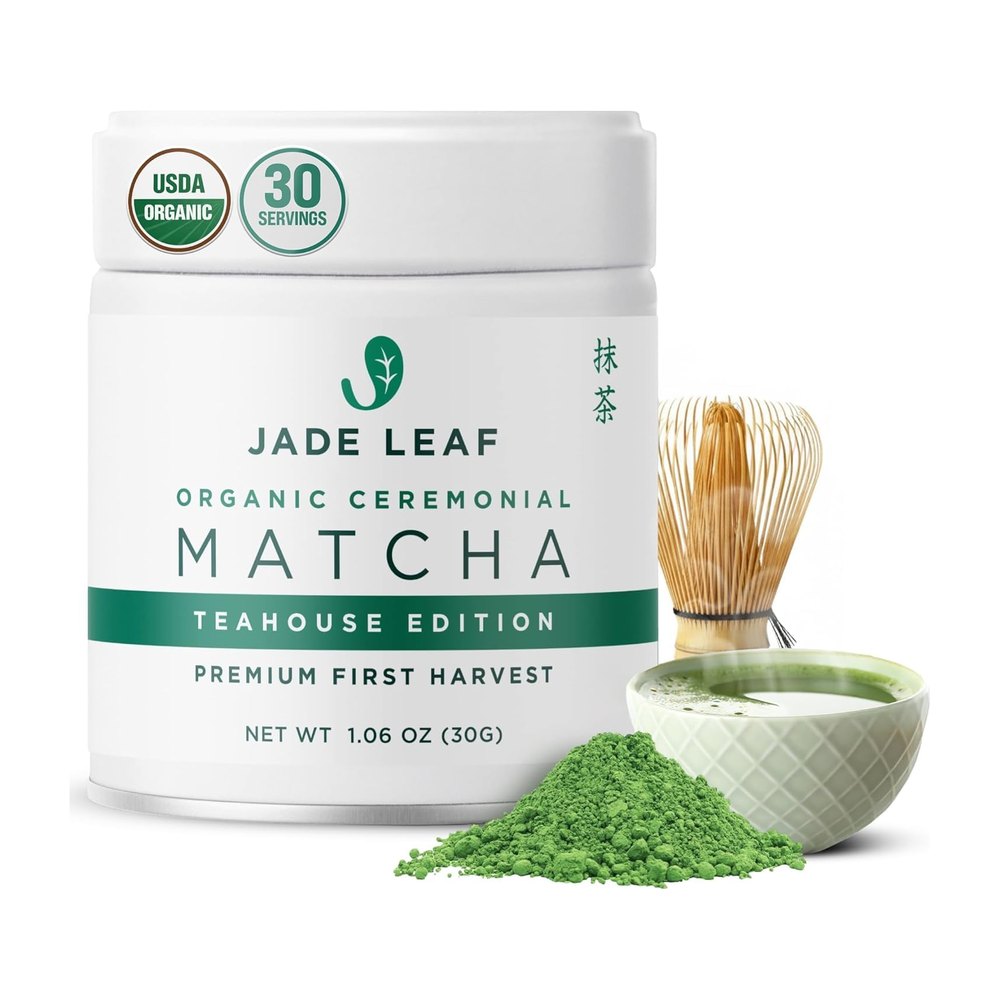
Jade Leaf Ceremonial Matcha (Teahouse, 30g)
USDA Organic Japanese ceremonial-grade matcha powder in a 30g tin — made for whisking or matcha lattes.
Shop on Amazon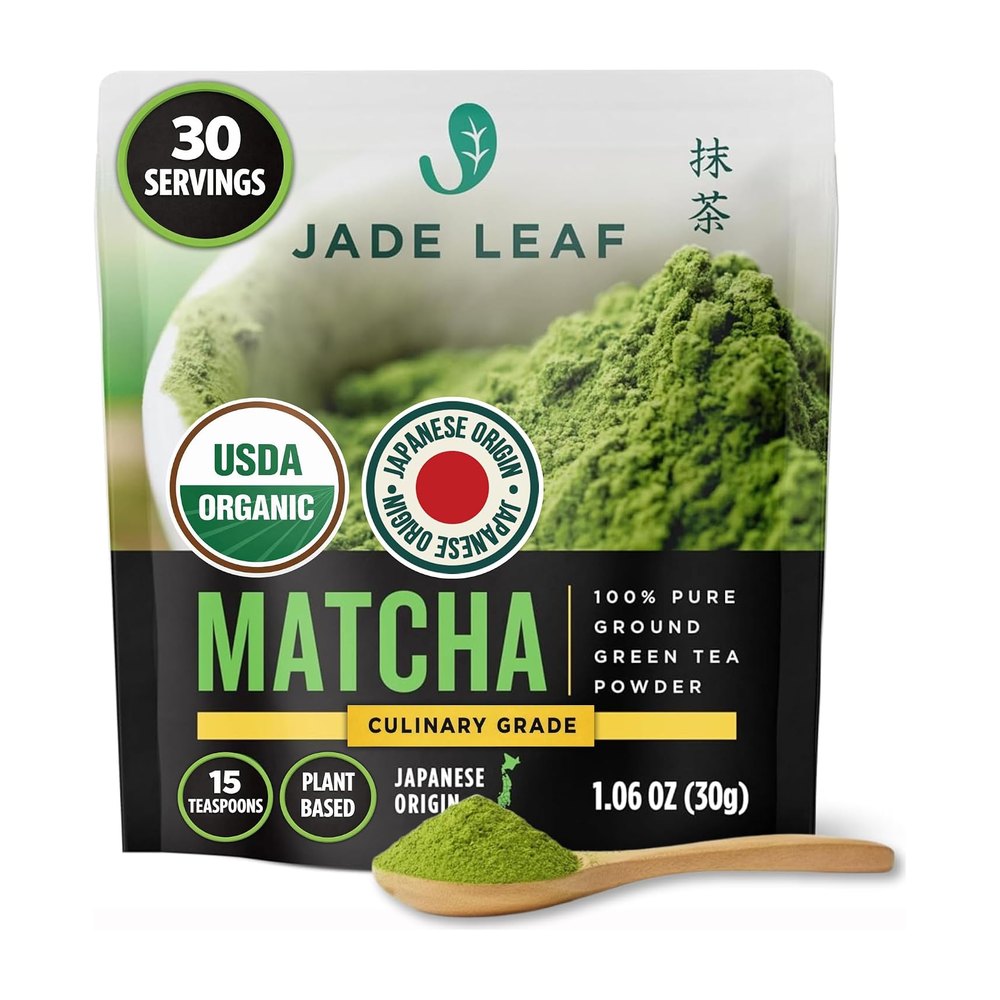
Jade Leaf Organic Culinary Grade Matcha (30g)
USDA Organic culinary-grade matcha powder in a 30g pouch, made for lattes, smoothies, and baking.
Shop on Amazon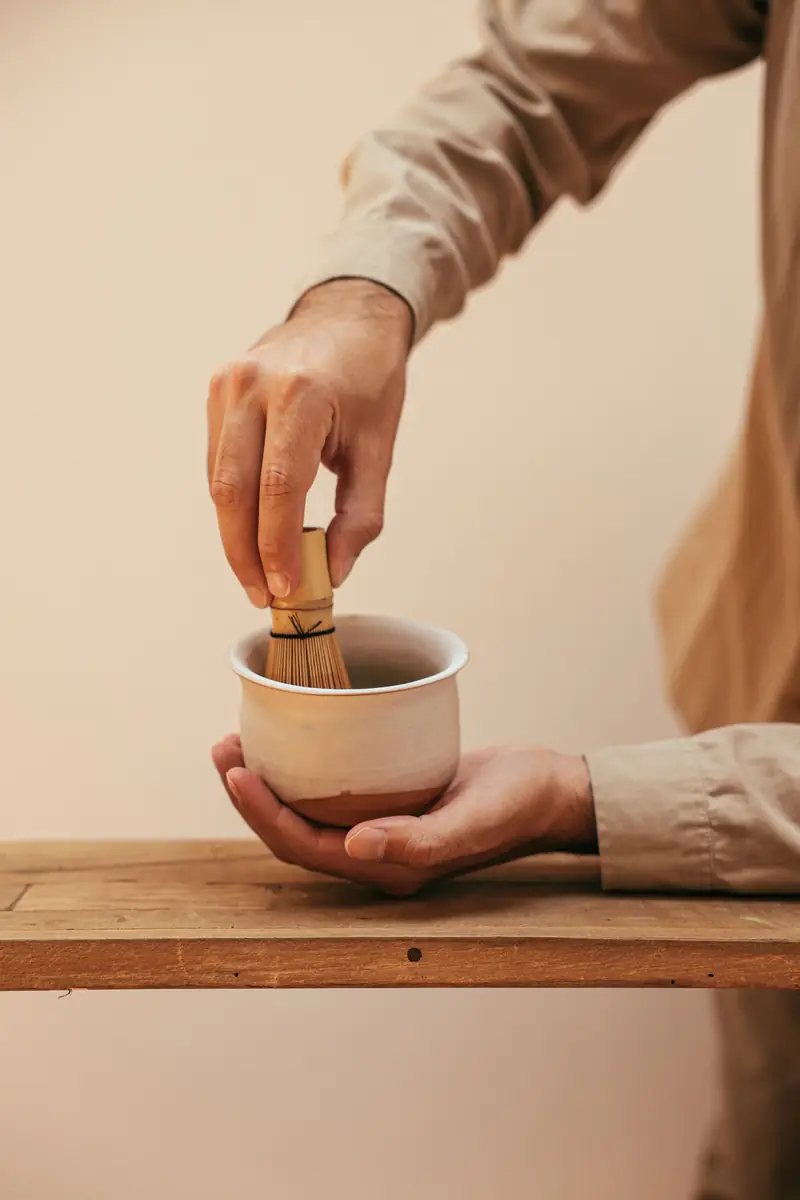
How to make matcha, step by step
This makes one bowl of usucha ("thin tea") - the everyday style most people mean by matcha.
- Soak your whiskPlace the chasen tines in a little warm water for a minute or two. This softens the bamboo so the tines are less likely to snap.
- Warm the bowlPour hot water into your bowl, swirl, then discard it and wipe the bowl dry. A warm bowl keeps your tea at a nice temperature.
- Sift the matchaSift about 1-2 g (roughly 1/2-1 teaspoon, or 1-2 bamboo scoops) into the bowl.
- Add a splash of waterOptional but helpful: add a teaspoon of water and press the powder into a smooth paste with the whisk.
- Add the rest of the waterPour in about 60-80 ml (2-3 fl oz) of water at around 70-80°C (160-175°F). Boiling water can make matcha taste bitter.
- Whisk brisklyHold the bowl steady and whisk quickly from your wrist in an "M" or "W" zig-zag - not in circles - for about 15-30 seconds, until a fine layer of foam forms. Finish by slowly lifting the whisk from the centre.
- Enjoy right awayMatcha is a suspension, not a solution, so it settles if left sitting. Drink it while it's fresh and frothy.
Whisk your matcha with a small amount of hot water first (about 30-60 ml) until smooth, then pour it over warm or iced milk of your choice. Sweeten to taste.
Caring for your tools & matcha
- Rinse, don't scrub: rinse the whisk in warm water straight after use and swish it in clean water. Skip soap - bamboo can absorb it.
- Dry in shape: let the whisk air-dry fully, tines down on a holder or upright, before putting it away. Storing it damp can lead to mould.
- Store matcha well: keep it airtight and away from light, heat and moisture. Many people keep opened matcha in the fridge (sealed tightly, and let it come to room temperature before opening to avoid condensation).
- Use it fresh: matcha loses colour and flavour over time once opened, so buying smaller tins you'll finish within a month or two is usually better than one huge bag.
Troubleshooting
- Lumpy? Sift first and make a paste before adding all the water.
- Too bitter? Try cooler water, a little less powder, or a higher grade.
- No foam? Whisk faster with a zig-zag wrist motion, keep the tines just touching the bottom, and make sure your whisk has been soaked.
- Dull colour or hay-like smell? The matcha may be old or lower grade - fresh matcha should smell grassy and sweet.
General information to help you get started. Photos are illustrative stock images, not specific products. Worthly Finds shares curated picks and does not claim to have personally tested every product. Disclosure.